
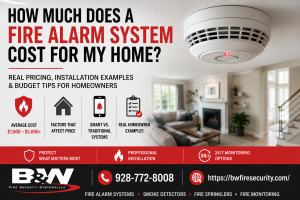
How Much Does a Fire Alarm System Cost for My Home?
Real Pricing, Installation Examples & Budget Planning for Homeowners
Protecting your home from fire is one of the most important investments you can make — but many homeowners aren’t sure what a fire alarm system should actually cost.
Some online articles claim you can protect your home for a few hundred dollars. Others recommend systems costing thousands without explaining why.
The reality is this:
The right fire alarm system depends on your home layout, your family’s needs, local code requirements, and how much protection you truly want.
At B&W Fire Security Systems, we’ve worked with homeowners across Arizona installing and upgrading residential fire alarm systems ranging from simple smoke detector replacements to fully monitored smart life safety systems.
In this guide, we’ll break down:
- Real-world residential fire alarm pricing
- What affects installation costs
- Smart vs traditional systems
- Monitoring options
- Actual homeowner examples
- Common mistakes homeowners make
- How to budget properly without overpaying
Average Residential Fire Alarm System Cost
Most professionally installed home fire alarm systems cost between:
$1,500 – $5,000 Installed
The final price depends on:
- Home square footage
- Number of detectors
- Existing wiring
- Smart features
- Monitoring requirements
- Ceiling accessibility
- Garage and attic coverage
- Local fire code requirements
Here’s a realistic breakdown homeowners can expect:
| Home Type | Typical Installed Cost |
|---|---|
| Small condo or townhouse | $800 – $1,500 |
| Standard single-family home | $1,500 – $3,500 |
| Smart monitored system | $2,500 – $5,000 |
| Large custom home | $5,000 – $10,000+ |
One of the biggest misconceptions we see is homeowners comparing DIY smoke alarms from big-box stores to professionally designed life safety systems.
They are not the same level of protection.
What’s Included in a Professional Fire Alarm System?
A professionally installed residential fire alarm system usually includes:
- Smoke detectors
- Heat detectors
- Carbon monoxide detectors
- Interconnected alarms
- Backup battery systems
- Audible sirens
- Central control panel
- Mobile app integration
- 24/7 monitoring options
- Emergency notification capability
Higher-end systems may also include:
- Smart home automation
- Voice evacuation alerts
- Wireless communication
- Fire department dispatch integration
- Generator backup integration
If you’re unsure which system type fits your home, B&W Fire Security Systems offers customized residential fire alarm solutions designed around your property and budget.
Real Homeowner Examples & Pricing Scenarios
Example 1: Basic Family Home Upgrade
Home:
1,800 sq ft single-story home in Prescott Valley
Problem:
The homeowner had outdated battery smoke alarms over 12 years old that were no longer reliable.
Solution Installed:
- 8 interconnected smoke detectors
- 2 carbon monoxide detectors
- Hardwired system with battery backup
Approximate Cost:
$1,800 – $2,400
Outcome:
The family gained full-home audible protection where every alarm activates simultaneously during an emergency.
This is one of the most common upgrades homeowners request after buying an older home.
Example 2: Smart Fire Alarm System for a Vacation Home
Home:
2,600 sq ft seasonal home
Problem:
The homeowner spent several months away each year and wanted remote alerts if smoke was detected.
Solution Installed:
- Smart smoke detectors
- Mobile app alerts
- Remote monitoring
- Cellular backup communication
Approximate Cost:
$3,500 – $5,500
Outcome:
The homeowner now receives immediate notifications from anywhere and can dispatch emergency services faster during an incident.
Vacation homes are one of the strongest use cases for monitored fire alarm systems.
For homeowners interested in remote protection, smart systems can integrate with broader home security and monitoring services.
Example 3: Large Custom Home with Detached Garage
Home:
4,500 sq ft custom property with workshop
Challenges:
- Multiple structures
- High ceilings
- Garage heat concerns
- Extended detector coverage needs
Solution Installed:
- Zoned fire alarm system
- Heat detectors in garage/workshop
- Smart monitoring
- Integrated carbon monoxide protection
Approximate Cost:
$6,000 – $10,000+
Outcome:
Complete property-wide protection with separate zone identification for faster emergency response.
What Actually Affects Fire Alarm Installation Costs?
1. Home Size
The larger the home, the more devices are required.
Most homes need detectors:
- In every bedroom
- Outside sleeping areas
- On every floor
- Near stairways
- In hallways
- Near attached garages
Larger homes may also require:
- Attic heat detectors
- Utility room monitoring
- Detached structure coverage
The National Fire Protection Association (NFPA) recommends installing smoke alarms on every level of the home and inside every sleeping area.
Source: https://www.nfpa.org/
2. Existing Wiring
New construction is significantly easier and less expensive than retrofitting an older home.
Older homes may require:
- Drywall access
- Electrical upgrades
- Attic wire routing
- Ceiling modifications
This is often where labor costs increase.
If your home already has outdated equipment, replacing aging systems during a remodel is usually more cost-effective than waiting for failures later.
3. Smart Features & Monitoring
Many homeowners today want:
- Smartphone alerts
- Remote monitoring
- Alexa or Google Home integration
- App-based notifications
These features improve convenience and emergency response speed, but they also increase equipment costs.
According to Consumer Reports, interconnected and monitored systems significantly improve whole-home fire awareness during emergencies.
Source: https://www.consumerreports.org/
Smart Fire Alarm Systems vs Traditional Systems
Homeowners often ask:
“Are smart fire alarms worth the extra money?”
In many cases, yes — especially for larger homes, vacation homes, or families that travel frequently.
Traditional Systems Are Best For:
- Budget-conscious homeowners
- Smaller homes
- Basic protection needs
- Simplicity
Smart Systems Are Best For:
- Remote monitoring
- Vacation properties
- Real-time phone alerts
- Smart home integration
- Faster emergency awareness
The most important factor, however, is still proper detector placement and professional installation.
A poorly installed “smart” system can still fail to provide adequate protection.
The Hidden Costs Homeowners Often Miss
One reason online pricing estimates vary so much is because they leave out secondary costs.
Potential additional expenses include:
| Additional Item | Typical Cost |
| Electrical upgrades | $200 – $1,000 |
| Drywall repair | $100 – $500 |
| Permit fees | $50 – $300 |
| Monitoring activation | $100 – $300 |
| Annual inspections | Varies |
| Battery replacements | Ongoing |
Professional companies should explain these costs upfront before installation begins.
At B&W Fire Security Systems, we believe transparent pricing and realistic planning are critical to protecting homeowners from surprise costs later.
DIY vs Professional Installation
DIY smoke alarms are inexpensive upfront.
But professionally installed systems provide major advantages:
Professional Systems Offer:
- Correct detector placement
- Code compliance
- Interconnected alarms
- Better reliability
- Reduced false alarms
- Proper coverage planning
- Long-term maintenance support
We’ve seen many homes with:
- missing detectors
- outdated alarms
- improperly placed devices
- dead backup batteries
- disconnected units
Unfortunately, homeowners often don’t realize these problems until an emergency occurs.
The U.S. Fire Administration reports that working smoke alarms cut the risk of dying in a home fire nearly in half.
Source: https://www.usfa.fema.gov/
Why Experience Matters in Fire Protection
Not all alarm companies specialize in residential fire systems.
At B&W Fire Security Systems, we understand:
- NFPA fire safety recommendations
- residential code requirements
- Arizona installation challenges
- smart monitoring technologies
- detector placement best practices
- retrofit installation methods
We also understand that homeowners want realistic advice — not overselling.
Some homes need simple upgrades.
Others require complete system redesigns.
The key is designing protection around the actual risks of the property.
If you’re planning a larger home safety upgrade, you may also want to explore integrated security camera and access control solutions.
Fire Alarm Considerations for Arizona Homeowners
Arizona homes face unique environmental factors including:
- Extreme summer heat
- Dust exposure
- Seasonal wildfire risk
- Detached garages/workshops
- Vacation property vacancies
These conditions can affect:
- detector selection
- sensor placement
- monitoring needs
- maintenance schedules
That’s why local experience matters when designing a residential fire alarm system.
Homeowners in wildfire-prone areas should also review local emergency preparedness recommendations from Ready.gov:
https://www.ready.gov/wildfires
How to Budget for a Fire Alarm System
A realistic homeowner budget should generally be:
| Protection Level | Budget Range |
| Basic smoke protection | $800 – $1,500 |
| Full interconnected system | $1,500 – $3,500 |
| Smart monitored protection | $3,000 – $6,000 |
| Large luxury home systems | $6,000 – $10,000+ |
The goal shouldn’t simply be “the cheapest system.”
The goal should be:
reliable protection that works when your family needs it most.
Frequently Asked Questions
How long do residential fire alarm systems last?
Most smoke detectors should be replaced every 10 years. Control panels and system components may last longer depending on maintenance and manufacturer recommendations.
The NFPA recommends testing smoke alarms monthly and replacing batteries regularly.
Is monitoring worth it for a home fire alarm system?
For many homeowners, yes — especially for vacation homes, elderly residents, or families frequently away from home.
Monitoring can significantly reduce emergency response time.
Can I install a fire alarm system myself?
Basic smoke alarms can be DIY-installed, but professionally installed systems provide better reliability, code compliance, and whole-home integration.
Do home fire alarm systems lower insurance costs?
Many insurance companies offer discounts for monitored or professionally installed systems.
Ask your provider about discounts available for monitored life safety systems.
Protect Your Home with B&W Fire Security Systems
At B&W Fire Security Systems, we help Arizona homeowners install dependable fire alarm and life safety systems designed around real-world protection — not one-size-fits-all packages.
We provide:
- Residential fire alarm installation
- Smart fire alarm systems
- Smoke detector upgrades
- Carbon monoxide protection
- Fire alarm inspections
- Monitoring solutions
- Custom life safety system design
Whether you need a basic upgrade or a fully monitored smart system, our team can help you build the right solution for your home and budget.