
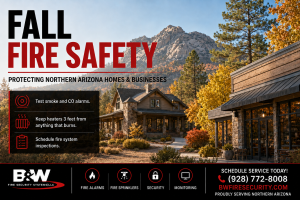
Fall Fire Safety in Northern Arizona: A Checklist for Homes and Businesses
Fall Fire Safety becomes especially important in Northern Arizona as temperatures begin to drop and families and businesses start using furnaces, fireplaces, wood-burning stoves and portable heaters again.
From Prescott and Prescott Valley to Flagstaff, Sedona, Chino Valley and Camp Verde, cooler weather brings seasonal fire risks that can easily be overlooked. A heater placed too close to stored materials, an outdated smoke alarm or a closed fire sprinkler valve can turn a small issue into a serious emergency.
Following a Fall Fire Safety checklist can help protect your property, employees, customers and family throughout the colder months.
Why Fall Fire Safety Matters in Northern Arizona
Northern Arizona’s changing temperatures often mean heating equipment is used for the first time in several months. Dust may have collected around furnaces, chimneys may need cleaning and portable heaters may be pulled out of storage without being checked.
According to the U.S. Fire Administration, heating fires remain one of the leading causes of residential fires in the United States. The agency recommends keeping anything that can burn at least three feet away from fireplaces, wood stoves, radiators, space heaters and other heat sources.
Preparing before the first cold night can reduce fire risks and help ensure your fire protection equipment is ready when you need it.
Fall Fire Safety Step 1: Test Your Smoke Alarms
Working smoke alarms provide an early warning when a fire begins. Test every smoke alarm in your home or building and replace weak or missing batteries.
For homes, smoke alarms should generally be installed:
- Inside every bedroom
- Outside each sleeping area
- On every level of the home
- In basements and other occupied areas
The U.S. Fire Administration’s smoke alarm guidance recommends testing smoke alarms monthly and replacing the entire alarm when it reaches 10 years of age.
Never disable an alarm because of nuisance alarms or repeated chirping. Those warnings may indicate a weak battery, contamination, an expired device or another condition that needs attention.
Commercial property owners should also schedule professional fire alarm and sprinkler inspections to confirm their systems are operating correctly and inspection records are current.
Fall Fire Safety Step 2: Inspect Fire Alarm Systems
A fire alarm can only protect your property when it operates correctly. Fall is a good time to verify that the alarm panel is clear of trouble signals and that smoke detectors, pull stations, horns, strobes and other components are functioning properly.
Watch for warning signs such as:
- Trouble lights or messages on the alarm panel
- Repeated beeping
- Damaged, dirty or painted detectors
- Loose or missing devices
- Frequent nuisance alarms
- Outdated equipment
- Recent remodeling that may have affected the system
Do not ignore a trouble signal or silence the panel without determining what caused the warning. The signal could indicate a communication failure, low battery, damaged device or wiring condition.
A professional inspection can identify deficiencies before they contribute to a failed fire inspection or prevent the system from responding properly.
3. Review Your Fire Alarm Monitoring Account
Professional fire alarm monitoring provides an additional layer of protection by sending signals to a monitoring center when the system detects an alarm, trouble or supervisory condition.
Businesses should verify that their emergency contact list is current. If an employee, property manager or owner has changed, update the account so the correct people can be contacted.
Monitoring is especially important when a building is closed or unoccupied. A local-only alarm may sound inside the building, but no one may be there to hear it. Learn more about how fire system monitoring works and the benefits it offers Northern Arizona property owners.
Adding monitoring account verification to your Fall Fire Safety routine can help prevent delays and confusion during an emergency.
Fall Fire Safety Step 4: Use Space Heaters Carefully
Portable heaters can warm a cold office, workshop or room quickly, but they must be placed and operated safely.
Follow these space heater safety tips:
- Keep heaters at least three feet from furniture, curtains, bedding and boxes.
- Place heaters on a stable, level surface.
- Plug heaters directly into a wall outlet.
- Never use an extension cord or power strip.
- Choose a heater with an automatic tip-over shutoff.
- Turn the heater off when leaving the room or going to bed.
- Replace heaters with damaged cords, loose plugs or unusual odors.
The National Fire Protection Association’s heating safety guidance provides additional information about safely using furnaces, fireplaces, wood stoves and portable heaters.
Businesses should establish clear rules for portable heaters. A heater left running under a desk or next to stored paper can create an unnecessary fire risk.
5. Have Fireplaces, Chimneys and Furnaces Checked
A complete Fall Fire Safety plan should include professional heating equipment maintenance.
Before using a fireplace or wood-burning stove, have the chimney and related equipment inspected and cleaned by a qualified professional. Creosote buildup, blocked vents and damaged components may increase the risk of fire or carbon monoxide exposure.
Keep a metal or glass screen in front of fireplaces to help contain sparks and embers. Completely extinguish fires before leaving the property or going to bed.
Furnaces should also be inspected annually. Keep boxes, cleaning supplies, paper products and other combustible materials away from furnaces, water heaters, electrical panels and mechanical rooms.
Fall Fire Safety Step 6: Check Fire Extinguishers
Fire extinguishers are often forgotten until an emergency happens. Walk through your home or business and make sure every extinguisher is accessible, properly mounted and appropriate for the surrounding fire risks.
Check for:
- Missing or damaged safety pins
- Low pressure readings
- Corrosion, dents or physical damage
- Cracked hoses or damaged nozzles
- Blocked access
- Missing or expired inspection tags
Employees should know where extinguishers are located and understand how to use them. An extinguisher should only be used when the fire is small, emergency services have been contacted and the person has a safe exit behind them.
B&W Fire Security Systems provides professional fire extinguisher inspections, maintenance and replacement throughout Northern Arizona.
You can also read our guide to fire extinguishers in Prescott, Flagstaff and Sedona to learn about extinguisher classes, inspections and maintenance.
Fall Fire Safety Step 7: Inspect Fire Sprinkler Systems
Commercial and residential fire sprinkler systems require regular inspection, testing and maintenance. Building owners and property managers should watch for damaged sprinkler heads, blocked coverage, leaking pipes and closed control valves.
Never paint, cover, hang decorations from or place objects against sprinkler heads. Storage should also remain below sprinkler heads so water can distribute properly during a fire.
A closed or partially closed control valve can prevent water from reaching the sprinkler system. If a valve has been adjusted, a tamper switch is showing a supervisory signal or the system has been damaged, contact a qualified fire sprinkler company.
Review this fire sprinkler system inspection checklist to learn which components should be checked and why professional inspections are important.
8. Clear Exits and Fire Protection Equipment
Fall deliveries, holiday merchandise and seasonal decorations can create additional clutter. Make sure boxes, furniture and equipment do not block:
- Exit doors
- Hallways and stairwells
- Fire extinguishers
- Fire alarm panels
- Sprinkler control valves
- Electrical panels
- Emergency lighting
Exit signs and emergency lights should remain visible and operational. Employees must be able to leave the building without searching for an exit or moving stored materials.
Avoid overloading outlets, connecting multiple power strips or running extension cords through doorways and walkways. Damaged electrical cords and warm or discolored outlets should be addressed promptly.
Keeping exits and safety equipment accessible is one of the simplest but most important Fall Fire Safety steps for a business.
Fall Fire Safety Step 9: Practice Your Emergency Plan
Fire protection equipment is only part of a complete safety plan. Everyone should know what to do when an alarm sounds.
Homes should have two possible exits from each room and a designated outdoor meeting location. Businesses should review evacuation procedures, employee responsibilities and emergency contact information.
The NFPA recommends creating and practicing a home fire escape plan so every member of the household knows how to respond.
Practice your plan before an emergency occurs. During a fire, leave immediately, stay outside and call 911. Never reenter a burning building to retrieve belongings.
Schedule Your Fall Fire Safety Inspection
Fall Fire Safety starts with preparation. Testing alarms, clearing exits and maintaining fire protection systems can help reduce risks as colder weather arrives.
B&W Fire Security Systems provides fire alarm, fire sprinkler, fire extinguisher, security and 24/7 monitoring services for homes and businesses throughout Yavapai and Coconino counties.
Whether you manage a commercial building in Flagstaff, operate a business in Prescott Valley or want better protection for your Northern Arizona home, our experienced local team is ready to help.
Do not wait until an alarm activates or an inspection identifies a deficiency. Make Fall Fire Safety a priority and prepare your property before colder weather arrives.
Contact B&W Fire Security Systems to schedule an inspection, request service or receive an estimate.
Call 928-772-8008 or visit BWFireSecurity.com today.