Commercial Kitchen Fire Suppression Systems: What Arizona Restaurant Owners Need to Know
Commercial kitchen fire suppression systems provide critical protection for Arizona restaurants, cafés, food trucks, and other commercial cooking operations. Grease, cooking oils, open flames, hot surfaces, and electrical equipment can create a dangerous combination inside a busy kitchen.
A cooking fire can spread from an appliance into the exhaust hood and ductwork within minutes. Properly designed and maintained commercial kitchen fire suppression systems can detect excessive heat, release a specialized extinguishing agent, shut down cooking equipment, and help prevent flames from spreading.
Whether you operate a restaurant, hotel kitchen, school cafeteria, bar, assisted-living facility, or mobile food business, understanding how your fire protection works is an important part of keeping your employees, customers, property, and business safe.
What Are Commercial Kitchen Fire Suppression Systems?
Commercial kitchen fire suppression systems are automatic fire-extinguishing systems designed for kitchens that use equipment capable of producing grease-laden vapors.
A typical system protects:
- Deep fryers
- Griddles and grills
- Ranges and stovetops
- Woks
- Charbroilers
- Cooking appliances
- Exhaust hoods
- Grease filters
- Plenums
- Exhaust ducts
Most modern restaurant systems use a wet chemical extinguishing agent. When excessive heat is detected—or the system is manually activated—the agent is discharged through nozzles positioned over the protected appliances and inside the hood, plenum, and ductwork.
The wet chemical reacts with hot cooking oils to create a foam-like layer over the burning surface. This helps suppress the flames, cool the cooking oil, and reduce the chance of the fire reigniting.
Kitchen suppression is only one part of a complete restaurant safety plan. Businesses should also maintain their commercial fire alarm and security systems to support early notification, evacuation, and emergency response.
How Do Commercial Kitchen Fire Suppression Systems Work?
Commercial kitchen fire suppression systems are designed to respond quickly when a dangerous cooking fire occurs. Depending on the system’s design, several protective actions may happen at the same time.
When the system activates:
- Wet chemical agent is released through the discharge nozzles.
- The agent covers the protected cooking appliances.
- Agent is discharged into the hood, plenum, or duct areas as designed.
- The gas or electrical supply to the cooking appliances is shut off.
- An audible or visual notification may activate.
- A signal may be sent to the building’s fire alarm or monitoring system.
- Employees and customers evacuate while emergency services respond.
The system also includes a manual pull station. This allows a trained employee to activate the system if a fire is discovered before the automatic detection components respond.
Employees should know where the manual pull station is located and how to report an emergency. However, no employee should put themselves in danger to activate the system. Evacuation and calling 911 should always remain the priority.
Why Commercial Kitchen Fire Suppression Systems Are Different
Restaurant kitchens present hazards that are not normally found in offices, retail stores, or other commercial properties. Cooking oils and grease can reach extremely high temperatures and continue burning even after visible flames have been temporarily extinguished.
Because of these hazards, ordinary portable fire extinguishers may not provide adequate protection by themselves.
Commercial kitchens commonly need a Class K fire extinguisher for fires involving vegetable oils, animal fats, and commercial cooking appliances. The National Fire Protection Association’s Class K fire extinguisher guide explains how these extinguishers are designed for high-temperature cooking fires.
A Class K extinguisher supports the automatic suppression system; it does not replace it. Employees should generally activate the kitchen suppression system before attempting to use the extinguisher, provided it is safe to do so and follows their training and emergency procedures.
Never throw water onto a grease fire. Water can cause burning oil to splash or erupt, spreading the fire and placing everyone in the kitchen at greater risk.
B&W Fire Security Systems provides professional fire extinguisher inspections and maintenance for restaurants and other Northern Arizona businesses.
Which Arizona Businesses Need Commercial Kitchen Fire Suppression Systems?
A commercial cooking operation may require a Type I exhaust hood and an automatic suppression system when its equipment produces grease-laden vapors. These requirements can apply to more than traditional sit-down restaurants.
Facilities that may need commercial kitchen fire suppression systems include:
- Restaurants and cafés
- Bars and breweries with kitchens
- Food trucks and mobile cooking units
- Hotels and resorts
- Schools and daycare facilities
- Hospitals and assisted-living facilities
- Grocery store delis
- Commercial bakeries
- Churches and community centers
- Event venues
- Employee cafeterias
- Catering businesses
- Ghost kitchens
Requirements depend on the cooking appliances, menu, fuel source, kitchen layout, adopted fire code, and local authority having jurisdiction.
Restaurant owners should consult their local fire department and a qualified fire-protection contractor before installing new appliances, changing cooking methods, or remodeling their kitchen.
Arizona Requirements for Commercial Kitchen Fire Suppression Systems
Fire-code requirements can vary among Arizona cities, counties, and fire districts. Many Northern Arizona jurisdictions rely on the International Fire Code, local amendments, and applicable National Fire Protection Association standards.
NFPA 96 addresses ventilation control and fire protection for commercial cooking operations. The exact requirements for a restaurant depend on the code edition and amendments adopted by the local jurisdiction.
For example, the City of Prescott requires permits when kitchen hoods or suppression systems are installed or modified. Its permit materials call for system plans, specifications, calculations, and applicable installer and designer certifications.
The City of Flagstaff Fire Prevention Division also explains that its regulations are governed by the International Fire Code, local amendments, and applicable NFPA standards.
Before beginning a commercial kitchen project, determine:
- Which building and fire codes apply
- Whether plans must be submitted
- Whether a permit is required
- Which professional certifications are required
- Whether an acceptance inspection must be completed
- How the suppression system must connect to the fire alarm
- Whether gas and electrical shutdowns are required
- What documentation must remain at the property
Obtaining the proper approvals before work begins can help prevent failed inspections, construction delays, expensive corrections, and postponed opening dates.
B&W provides fire-protection services in communities throughout Northern Arizona, including Prescott, Prescott Valley, Flagstaff, and Sedona.
How Often Should Commercial Kitchen Fire Suppression Systems Be Inspected?
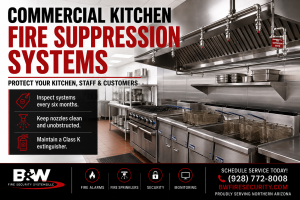
Inspection and service requirements depend on the system, manufacturer instructions, adopted code, and local fire authority. Many commercial kitchen fire suppression systems require professional inspection and servicing every six months.
During an inspection, a qualified technician may examine:
- The suppression-agent container
- System pressure or cartridge condition
- Detection components
- Fusible links
- Discharge nozzles and nozzle caps
- Appliance placement
- Manual pull stations
- Piping and fittings
- Gas and electrical shutdown functions
- Fire alarm connections
- Monitoring connections
- Service tags and inspection records
- Signs of damage or unauthorized alterations
The technician should also confirm that each cooking appliance remains in its approved position beneath the hood. Moving a fryer, grill, wok, or range may leave it outside the designed discharge area.
Restaurant staff should perform regular visual checks between professional service visits. Contact a qualified fire-protection company if a nozzle cap is missing, an appliance has been moved, the manual pull station is obstructed, the service tag is expired, or any system component appears damaged.
Restaurant owners can also learn more about B&W’s commercial fire alarm and sprinkler inspection services when reviewing the rest of their building’s fire-protection equipment.
When Commercial Kitchen Fire Suppression Systems Need Modification
One of the most common restaurant safety mistakes is changing cooking equipment without reviewing the existing suppression coverage.
Contact a qualified fire-protection contractor before:
- Installing a new fryer, grill, wok, or range
- Replacing an appliance with a different model
- Moving equipment beneath the hood
- Changing from electric to gas appliances
- Remodeling or expanding the kitchen
- Replacing the exhaust hood
- Changing the restaurant’s menu or cooking process
- Adding equipment that produces grease-laden vapors
Commercial kitchen fire suppression systems are designed around specific appliances, hazards, and nozzle locations. Even a small change to the cooking line can affect whether the system provides proper coverage.
Depending on the project and jurisdiction, modifications may require updated plans, permits, inspections, or approval from the local fire-code official.
Never assume that a replacement appliance is automatically covered simply because it fits under the existing hood.
Common Commercial Kitchen Fire Suppression System Deficiencies
Routine inspections can identify conditions that may prevent a system from operating correctly during an emergency.
Common deficiencies include:
- Overdue inspection or service tags
- Missing nozzle caps
- Grease-blocked discharge nozzles
- Painted or damaged fusible links
- Appliances moved from their approved positions
- Obstructed manual pull stations
- Disconnected gas or electrical shutoffs
- Equipment changes made without system updates
- Heavy grease accumulation inside the hood or ducts
- Missing or inaccessible Class K extinguishers
- Improper extinguisher placement
- Employees unfamiliar with emergency procedures
- Missing inspection and cleaning records
These issues can create serious safety risks and may result in a failed fire inspection. Addressing deficiencies early is usually easier and less disruptive than waiting until a fire inspector identifies them.
Hood Cleaning and Commercial Kitchen Fire Suppression Systems
Kitchen exhaust cleaning and fire suppression servicing are related, but they are not the same service.
Hood cleaning removes grease from the hood, grease filters, fans, and ductwork. Fire suppression service evaluates the equipment responsible for detecting and suppressing a cooking fire.
Both services are important. Grease accumulation can provide fuel for a fire and allow flames to spread into concealed ductwork. Restaurant owners should maintain a cleaning schedule based on cooking volume, equipment, fuel type, manufacturer recommendations, and local requirements.
After hood cleaning, confirm that:
- Suppression nozzles remain in their correct positions
- Nozzle caps are installed
- Fusible links have not been damaged
- Detection components have not been painted or covered
- Manual pull stations remain accessible
- Cooking appliances remain in their approved locations
The NFPA’s restaurant fire-protection overview provides additional information about the systems and maintenance practices used to protect commercial cooking operations.
What Should Employees Do If a Kitchen Fire Starts?
Every restaurant should have a written emergency plan and provide appropriate employee training.
If a cooking fire begins:
- Activate the kitchen suppression system using the manual pull station if it has not activated automatically and it is safe to do so.
- Call 911.
- Evacuate employees and customers.
- Use a Class K extinguisher only if the fire is small, the suppression system has activated, the employee is trained, and there is a safe exit behind them.
- Never use water on a grease fire.
- Do not restart cooking equipment after the fire.
- Have the system professionally inspected, recharged, and returned to service.
Even when the flames appear to be extinguished, heat and grease inside the hood or ductwork can allow the fire to reignite. Emergency responders should evaluate the situation before anyone reenters the building or resumes cooking.
After any activation, commercial kitchen fire suppression systems must be professionally serviced before the protected cooking equipment is placed back into operation.
Protect Your Restaurant with Commercial Kitchen Fire Suppression Systems
Maintaining commercial kitchen fire suppression systems is not only about passing an inspection. It is about protecting lives, reducing property damage, limiting business interruptions, and making sure your restaurant is prepared for an emergency.
B&W Fire Security Systems provides dependable commercial fire and security services throughout Northern Arizona. Our team can assist with kitchen fire suppression inspections, maintenance, repairs, modifications, fire extinguishers, fire alarms, monitoring, fire sprinklers, and other commercial fire-protection needs.
Do not wait until your next fire inspection—or an emergency—to discover that your system needs attention.
Contact B&W Fire Security Systems to request service or a free quote, or call 928-772-8008. Let our local team help keep your restaurant protected, compliant, and ready for business.