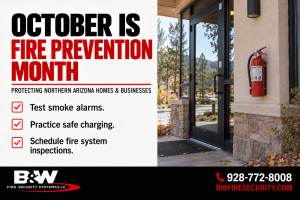
October Is Fire Prevention Month: 7 Fire Safety Tips for Northern Arizona
Fire Prevention Month is the perfect reminder to check the equipment and habits that help protect your home or business. When did you last test your smoke alarms, check your fire extinguishers, or review your fire protection inspection reports?
October brings fall gatherings, seasonal decorations, and cooler evenings across Northern Arizona. Before the holiday rush begins, take time to address the safety tasks that can slip down your to-do list.
At B&W Fire Security Systems, we help homeowners, business owners, and property managers throughout Prescott, Prescott Valley, Chino Valley, Sedona, Cottonwood, Camp Verde, and Flagstaff care for their fire protection equipment.
Here are seven practical ways to make this October safer.
What Is Fire Prevention Month?
Fire Prevention Month is observed throughout October to encourage fire safety education, safer everyday habits, and emergency preparation.
The month also includes Fire Prevention Week, October 4–10, 2026. This year’s National Fire Protection Association theme is “Charge Into Fire Safety: Safe Charging Is a Superpower,” which highlights charging habits that can reduce lithium-ion battery fire risks. You can find educational materials through the NFPA Fire Prevention Week website.
Use the month as a starting point: identify what needs attention, make the necessary changes, and keep those habits going throughout the year.
1. Start Fire Prevention Month by Testing Your Smoke Alarms
A smoke alarm can sit on your ceiling for years without getting much attention. October is a good time to check that yours are working and have not reached the end of their service life.
The U.S. Fire Administration recommends smoke alarms inside every bedroom, outside each separate sleeping area, and on every level of your home, including the basement.
During your check:
- Test home smoke alarms monthly using the test button.
- Check the manufacture date; smoke alarms generally need replacement after 10 years.
- Follow the manufacturer’s battery replacement and cleaning instructions.
- Choose interconnected alarms so that when one sounds, they all sound.
- Address missing, damaged, or nonworking alarms promptly.
Make smoke alarm testing a monthly habit. Set a recurring calendar reminder so the next check does not get forgotten.
Have questions about protecting your home? Explore B&W’s residential fire protection services.
2. Practice Safe Charging During Fire Prevention Month
Phones, tablets, laptops, cordless tools, e-bikes, and scooters often use lithium-ion batteries. This year’s fire safety campaign is a reminder to pay attention to how those devices are charged.
Take a look around your home or workplace. Is a phone charging under a pillow? Are tool batteries charging beside cardboard boxes? Is an e-bike blocking a doorway?
Build these safer habits into your routine:
- Use the charger supplied with the device or approved by its manufacturer.
- Charge on a hard, flat surface rather than a couch, bed, or pillow.
- Keep charging devices away from combustible materials.
- Keep charging equipment out of doorways and escape routes.
- Keep charging devices where you can see them, and unplug them when fully charged.
- Stop using a battery that swells, smells unusual, or becomes unusually hot.
If a battery begins smoking or catches fire, move away, get outside, and call 911.
Business owners can use Fire Prevention Month to review where employees charge personal devices and cordless equipment. A designated charging area can make safer practices easier to follow.
3. Check Your Fire Extinguishers Before You Need Them
Knowing you have a fire extinguisher is helpful. Knowing where it is, whether it is accessible, and whether it needs attention is even better.
Walk through your property and check for:
- Boxes, furniture, or supplies blocking access.
- Dents, corrosion, or damaged hoses.
- Pressure outside the recommended range, where a gauge is present.
- Missing or unreadable operating instructions.
Different fire hazards require appropriate extinguisher types. Commercial cooking equipment, for example, presents different hazards from ordinary combustible materials.
B&W offers business fire extinguisher inspections and maintenance to help identify equipment that needs service.
An extinguisher should never put your escape at risk. If you are unsure whether it is safe to use one, alert others, leave the building, and call 911.
4. Review Your Business’s Fire Protection Records
For business owners and property managers, Fire Prevention Month is a useful time to review inspection reports, service records, and outstanding repairs.
Start with these questions:
- When were your fire alarm and sprinkler systems last inspected and tested?
- Did the reports identify deficiencies?
- Have those deficiencies been addressed?
- Is any required service approaching its due date?
- Have renovations, tenant changes, or new equipment created questions about your existing fire protection?
- Who is responsible for scheduling service and keeping records?
The U.S. Fire Administration encourages employers to maintain working fire protection equipment and teach employees about escape routes and equipment locations.
If your records are scattered across emails, folders, and filing cabinets, bring them together. Having the information readily available makes follow-up easier.
B&W’s commercial fire protection services include inspections, maintenance, and installation for fire alarms, sprinklers, extinguishers, and kitchen fire suppression equipment.
5. Add Heating Safety to Your October Routine
Cooler Northern Arizona evenings make October a practical time to think about heating safety.
Before using your fireplace or bringing out a portable heater, follow the U.S. Fire Administration’s heating safety recommendations:
- Keep materials that can burn at least three feet from heat sources.
- Turn space heaters off before leaving the room or going to bed.
- Have heating equipment and chimneys professionally cleaned and inspected each year.
- Never use an oven to heat your home.
Look at the area surrounding your heater, too. Furniture, blankets, curtains, and seasonal decorations can gradually move closer to a heat source.
A quick check now is a useful addition to your Fire Prevention Month routine.
6. Keep Cooking Safety on the Menu
Fall meals and holiday preparations can make kitchens busy. Between answering the door, helping the kids, and checking your phone, it is easy to get distracted.
According to the U.S. Fire Administration, cooking is the leading cause of home fires and home fire injuries.
Practice these habits:
- Stay with your pan; turn the burner off if you leave the kitchen.
- Keep towels, packaging, and other combustible items away from the stovetop.
- Turn pot handles toward the back of the stove.
- Watch for excessive heat, smoke, or overheating grease.
For more guidance, visit the U.S. Fire Administration’s cooking fire safety page.
Restaurant owners can also use October to review kitchen fire suppression service records and follow up on unresolved maintenance needs.
7. Practice Your Escape Plan During Fire Prevention Month
If an alarm sounds tonight, does everyone in your home know what to do?
Make a simple escape plan together:
- Draw a map showing doors and windows.
- Identify two ways out of each room where possible.
- Keep escape routes clear.
- Choose an outdoor meeting place.
- Practice with everyone in the household.
The U.S. Fire Administration warns that occupants may have less than two minutes to escape after a smoke alarm sounds. Practicing your plan helps make the next steps familiar. Use its home fire escape planning resources to get started.
At work, review exit locations, escape routes, and fire protection equipment with employees. Make sure posted evacuation plans are easy to find and understand.
Fire Prevention Month Checklist for Homes and Businesses
Choose a day this October to work through this checklist:
- Smoke alarms: Test them and check their manufacture dates.
- Charging habits: Review chargers, battery condition, and charging locations.
- Fire extinguishers: Check accessibility and visible condition.
- Inspection records: Review reports and follow up on outstanding deficiencies.
- Heating equipment: Prepare it for seasonal use.
- Cooking areas: Remove nearby combustible materials.
- Escape routes: Clear obstructions.
- Emergency plans: Practice at home or review procedures with employees.
- Service needs: Schedule professional attention where needed.
For a business, assign each task to someone and give it a completion date. At home, put the checklist on the refrigerator or in your calendar.
Frequently Asked Questions About Fire Prevention Month
When is Fire Prevention Month?
Fire Prevention Month is commonly observed throughout October. It encourages communities to reduce fire hazards, maintain safety equipment, and prepare for emergencies.
What is the 2026 Fire Prevention Week theme?
The 2026 theme is “Charge Into Fire Safety: Safe Charging Is a Superpower.” Fire Prevention Week runs October 4–10 and focuses on safer charging habits for lithium-ion battery-powered devices.
How often should I test home smoke alarms?
Test home smoke alarms monthly and follow the manufacturer’s maintenance instructions. Check their age as well; smoke alarms generally need replacement after 10 years.
Can B&W help with fire protection inspections?
Yes. B&W Fire Security Systems provides fire protection inspections, maintenance, and installation services in Northern Arizona. Contact our team to discuss your property and the service you need.
Make Fire Prevention Month Count With B&W
The safety task you have been meaning to handle deserves a place on this month’s calendar. Whether it is checking an extinguisher, addressing a fire alarm concern, or arranging service for your business, October is a good time to get started.
B&W Fire Security Systems helps Northern Arizona homeowners and businesses care for their fire protection equipment.
Call 928-772-8008 or visit bwfiresecurity.com to request service.
This Fire Prevention Month, take the time to check your equipment, address concerns, and practice your plan.