
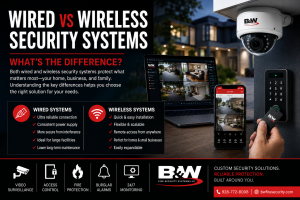
What’s the Difference Between Wired and Wireless Security Systems?
Wired vs Wireless Security Systems is one of the most common comparisons homeowners and business owners make when choosing a security solution. While both options provide effective protection, they differ significantly in installation, reliability, maintenance requirements, flexibility, and long-term costs. Understanding these differences can help you select the right security system for your Arizona home or business.
At B&W Fire Security Systems LLC, we help homeowners and businesses throughout Arizona design customized security solutions that meet their unique needs. Whether you’re considering a wired security system, a wireless security system, or a hybrid solution, our team can help you make an informed decision.
Understanding Wired Security Systems
A wired security system connects cameras, sensors, alarms, and control panels using physical cabling. These systems are commonly installed in commercial buildings, warehouses, schools, and new construction projects where maximum reliability is essential.
Advantages of Wired Security Systems
Superior Reliability
Because wired systems communicate through dedicated cables, they are not affected by Wi-Fi outages, signal interference, or wireless dead zones. This makes them an excellent choice for businesses requiring continuous monitoring and dependable performance.
Many organizations combine wired systems with commercial security solutions to create a comprehensive protection strategy.
Consistent Power Supply
Most wired security devices receive continuous power through their cabling, eliminating the need for frequent battery replacements. This reduces maintenance requirements and helps ensure uninterrupted operation.
Enhanced Security
Physical connections are generally more difficult to intercept than wireless communications. For businesses with sensitive assets, combining a wired security system with access control systems provides an additional layer of protection.
Long-Term Value
While installation costs may be higher initially, wired systems often require less maintenance over time and can deliver excellent long-term value for property owners.
Disadvantages of Wired Security Systems
- Installation requires running cables through walls, ceilings, or conduit.
- Initial installation costs are typically higher.
- Expanding the system may require additional wiring.
- Installation can be more disruptive in existing buildings.
Understanding Wireless Security Systems
Wireless security systems use Wi-Fi or radio frequency signals to communicate between devices and the control panel. These systems have become increasingly popular because they offer flexibility and fast installation.
Advantages of Wireless Security Systems
Quick Installation
Wireless devices can often be installed with minimal disruption, making them ideal for existing homes, retail stores, and leased properties.
Many property owners choose wireless systems alongside modern security system solutions because they can be deployed quickly and expanded easily.
Flexible and Scalable
Adding new cameras, sensors, or alarms is typically much easier with a wireless system since there is no need to run additional cables.
For example, wireless cameras can easily complement an existing video surveillance system as your security needs grow.
Remote Access
Most wireless security systems allow users to monitor cameras, receive alerts, and control their systems directly from a smartphone or tablet. This provides greater convenience and visibility whether you’re at home, at work, or traveling.
Ideal for Difficult Installations
Historic buildings, rental properties, and facilities where running cables would be difficult can benefit significantly from wireless technology.
Disadvantages of Wireless Security Systems
- Signal interference can impact performance.
- Battery-powered devices require periodic maintenance.
- Large properties may need additional wireless infrastructure.
- Networks must be properly secured against cyber threats.
According to the National Institute of Standards and Technology (NIST), implementing strong cybersecurity practices is essential for protecting connected devices and networks from unauthorized access.
Wired vs. Wireless Security Systems: A Side-by-Side Comparison
| Feature | Wired Security Systems | Wireless Security Systems |
|---|---|---|
| Reliability | Excellent | Very Good |
| Installation Time | Longer | Faster |
| Upfront Cost | Higher | Lower |
| Maintenance | Lower | Moderate |
| Scalability | More Complex | Easy |
| Remote Access | Available | Common |
| Battery Requirements | None | Often Required |
| Best For | Businesses, permanent installations | Homes, rentals, renovations |
When evaluating Wired vs Wireless Security Systems, the best choice depends on your property’s layout, budget, and security requirements.
Which Security System Is Right for You?
Choose a Wired Security System If:
- You own the property.
- You’re building a new facility or renovating.
- Reliability is your highest priority.
- You need extensive camera coverage.
- You want minimal ongoing maintenance.
Choose a Wireless Security System If:
- You need fast installation.
- You rent or may relocate.
- You want flexibility for future expansion.
- Running cables would be expensive or impractical.
- Smartphone monitoring is important to you.
For guidance on physical security best practices, organizations such as ASIS International provide valuable industry resources and standards used by security professionals worldwide.
Hybrid Systems: Combining the Best of Both
Many modern installations combine wired and wireless technologies. A hybrid system may use wired cameras and alarm panels for maximum reliability while incorporating wireless sensors in areas where cabling would be difficult.
This approach offers the dependability of wired infrastructure and the flexibility of wireless expansion, making it a popular choice for businesses and large residential properties.
Property owners interested in enhancing their overall security strategy can also review recommendations from the National Crime Prevention Council, which provides guidance on protecting homes and businesses from crime.
Let B&W Fire Security Systems Help You Choose
There is no one-size-fits-all solution when it comes to security systems. The best choice depends on your property’s size, layout, budget, and security requirements.
At B&W Fire Security Systems LLC, we specialize in customized security system installations, advanced video surveillance systems, access control solutions, and comprehensive commercial security systems throughout Arizona.
Ready to improve your property’s security? Contact B&W Fire Security Systems today to schedule a professional consultation and receive a customized security recommendation tailored to your needs.