
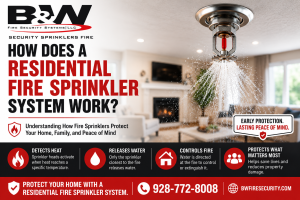
How Does a Residential Fire Sprinkler System Work?
Protecting Your Home and Family with Automatic Fire Protection
When most people think about fire protection, they think of smoke alarms. While smoke detectors are essential, they only provide a warning. A residential fire sprinkler system actively fights a fire the moment it starts, helping protect your family, your home, and your belongings before firefighters arrive.
At BW Fire Security Systems, we often hear homeowners ask, “How do residential fire sprinklers actually work?” The answer is surprisingly simple—and far more effective than many people realize.
What Is a Residential Fire Sprinkler System?
A residential fire sprinkler system is a network of pipes connected to a reliable water supply and strategically placed sprinkler heads throughout a home. These systems are designed to detect heat from a fire and automatically release water where it is needed most. Residential sprinkler systems are typically installed according to NFPA 13D standards, which focus on life safety and helping occupants escape safely during a fire.
Unlike smoke alarms, which only alert occupants, fire sprinklers actively control or suppress a fire in its early stages. The goal is to prevent a small fire from becoming a life-threatening emergency.
How Residential Fire Sprinklers Activate
One of the biggest misconceptions about fire sprinklers is that all sprinkler heads go off at once. Hollywood has helped spread this myth for decades.
In reality, each sprinkler head operates independently.
Every sprinkler head contains a heat-sensitive element, usually a small glass bulb filled with liquid or a fusible metal link. When temperatures near the sprinkler reach a specific threshold—typically between 135°F and 170°F—the heat-sensitive element activates and allows water to flow from that individual sprinkler head.
This means:
- Only the sprinkler closest to the fire usually activates.
- Water is directed directly onto the fire.
- Damage from fire is minimized.
- Unnecessary water discharge throughout the home does not occur.
According to NFPA data, a single sprinkler head controls most residential fires.
Step-by-Step: What Happens During a Fire?
1. A Fire Starts
A fire begins in a room, often in a kitchen, bedroom, or living area.
2. Heat Rises
As flames grow, heat rises toward the ceiling.
3. Sprinkler Head Activates
Once the surrounding temperature reaches the sprinkler’s activation point, the heat-sensitive element releases.
4. Water Discharges
Water immediately sprays in a carefully designed pattern to cool the fire and prevent it from spreading.
5. Fire Is Controlled
The sprinkler controls or extinguishes the fire while occupants evacuate and firefighters respond.
Many home fires are controlled before the fire department arrives, significantly reducing injuries and property damage.
Components of a Residential Fire Sprinkler System
A residential fire sprinkler system consists of several key components:
Water Supply
The system is connected to a municipal water supply, private well, storage tank, or dedicated fire protection water source.
Piping Network
Specialized fire sprinkler piping distributes water throughout the home.
Sprinkler Heads
Sprinkler heads are installed in designated living areas and activate individually when exposed to sufficient heat.
Control Valves
These valves regulate water flow and allow the system to be serviced when necessary.
Alarm Components
Many residential systems include waterflow alarms that notify occupants when the system activates.
Benefits of Residential Fire Sprinklers
Save Lives
Home fire sprinkler systems dramatically reduce the risk of death and injury during a residential fire. The NFPA reports that the risk of dying in a reported home fire is significantly lower when sprinklers are present.
Reduce Property Damage
Fire sprinklers attack fires while they are still small, helping prevent catastrophic damage. Research indicates sprinkler systems can substantially reduce property loss compared to homes without sprinklers.
Faster Fire Control
Sprinklers respond immediately, often long before firefighters can arrive on scene.
Protect What Matters Most
Beyond protecting the structure itself, sprinkler systems help preserve family heirlooms, important documents, electronics, and irreplaceable personal belongings.
Common Myths About Home Fire Sprinklers
Myth: Every Sprinkler Activates at Once
Fact: Only the sprinkler exposed to fire-level heat activates.
Myth: Sprinklers Cause More Damage Than Fire
Fact: Fire department hose lines discharge significantly more water than a residential sprinkler head. Early sprinkler activation often results in less overall damage.
Myth: Sprinklers Activate from Smoke
Fact: Sprinklers respond to heat, not smoke. Burnt toast or steam from a shower will not activate a sprinkler system.
Myth: Home Sprinklers Are Only for Large Homes
Fact: Residential fire sprinkler systems can be installed in homes of all sizes, including single-family homes, townhomes, and manufactured housing.
Is a Residential Fire Sprinkler System Worth It?
For many homeowners, the answer is yes.
Residential fire sprinklers provide 24/7 protection, whether you’re asleep, at work, or away on vacation. When paired with smoke alarms, they create one of the most effective fire protection strategies available for residential properties.
Considering the potential loss of life, property damage, and emotional impact caused by home fires, a sprinkler system is one of the smartest safety investments a homeowner can make.
Trust BW Fire Security Systems for Residential Fire Protection
At BW Fire Security Systems, we specialize in designing, installing, inspecting, and maintaining residential fire sprinkler systems that meet local codes and national fire protection standards.
Whether you’re building a new home, remodeling an existing property, or exploring fire protection options for your family, our experienced team can help you find the right solution.
Schedule a Residential Fire Sprinkler Consultation Today
Protect your home before a fire happens.
Contact BW Fire Security Systems today to learn more about residential fire sprinkler installation, inspections, maintenance, and code compliance services.