
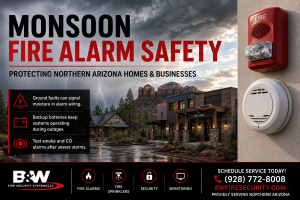
Monsoon Fire Alarm Safety: Ground Faults and Power Outages
Monsoon fire alarm safety is essential for protecting Arizona homes and businesses during seasonal storms. Lightning, heavy rain, strong winds, blowing dust, moisture intrusion, and power outages can affect commercial fire alarm systems and residential smoke and carbon monoxide alarms.
Effective monsoon fire alarm safety begins with understanding how severe weather affects alarm wiring, backup power, monitoring equipment, and detection devices. Preparing before storms arrive can help keep your equipment reliable and protect everyone inside your property.
B&W Fire Security Systems LLC provides professional fire alarm and fire protection services for homes and businesses throughout Northern Arizona.
Monsoon Fire Alarm Safety and Ground Faults
A ground fault occurs when electrical current unintentionally travels from fire alarm wiring to a grounded surface, such as metal conduit, an electrical box, or building steel.
During monsoon season, water can enter exterior devices, underground conduits, junction boxes, notification appliances, and damaged wiring. Even a small amount of moisture may create an electrical path that causes a commercial or multifamily fire alarm control panel to display a ground fault or trouble condition.
Common causes of fire alarm ground faults include:
- Water entering outdoor fire alarm devices
- Cracked conduit or damaged weatherproof seals
- Moisture collecting inside underground wiring pathways
- Corroded terminals and electrical connections
- Damaged insulation allowing wiring to contact metal
- Roof leaks near control panels, devices, or junction boxes
- Wind-blown debris damaging exposed equipment
A ground fault does not necessarily mean there is a fire, but it should never be ignored. It can interfere with system supervision, make other faults harder to locate, and affect the reliability of the fire alarm system.
Regular inspections are an important part of monsoon fire alarm safety because they can identify moisture intrusion, damaged wiring, and deteriorated seals before system performance is affected.
Businesses experiencing recurring trouble conditions can learn more about B&W’s commercial fire alarm installation, inspection, monitoring, and maintenance services.
Monsoon Fire Alarm Safety for Residential Alarms
Residential smoke and carbon monoxide alarms can also be affected by severe weather. Homes may have battery-powered alarms, hardwired alarms with battery backup, or interconnected alarms that communicate with one another.
Monsoon conditions may cause:
- Chirping after a power outage
- Weak or depleted backup batteries
- Loss of power to hardwired alarms
- Dust or moisture triggering nuisance alarms
- Lightning or electrical surges damaging interconnected alarms
- Water intrusion near ceiling-mounted devices
- Older alarms failing to reset after power is restored
If one interconnected alarm is damaged, it may cause other alarms in the home to sound or chirp. Never remove an alarm or leave it without a working battery simply to stop the noise.
Residential monsoon fire alarm safety includes testing every smoke and carbon monoxide alarm after an outage or severe storm. Any device that is damaged, expired, or unable to pass a test should be replaced promptly.
Learn more about B&W’s residential fire protection services, including smoke, carbon monoxide, and gas detection.
Fire Alarms During Power Outages
Commercial and Multifamily Fire Alarm Systems
Commercial and multifamily fire alarm systems normally operate from a building’s primary electrical power. When that power is lost, the fire alarm control panel should automatically switch to its standby batteries.
The panel will typically display an AC power loss or trouble condition. Depending on the system configuration, the signal may also be transmitted to a monitoring station.
Backup batteries provide temporary standby power—not unlimited operation. If an outage lasts too long, or if the batteries are weak, damaged, or past their useful life, the system may eventually lose power.
Repeated outages can place additional stress on aging batteries. A battery that appears normal during everyday operation may fail when required to support the system for an extended period. Reliable, properly maintained backup batteries are therefore essential to monsoon fire alarm safety.
Residential Smoke and Carbon Monoxide Alarms
Hardwired residential alarms should switch to backup power during an outage. If a backup battery is missing or weak, the alarm may chirp or may not operate correctly.
Battery-powered alarms are not directly affected by a loss of household electricity. However, monsoon moisture, blowing dust, extreme temperatures, and aging batteries can still affect their performance.
After a power outage:
- Verify that every smoke and carbon monoxide alarm has power.
- Check for chirping, warning lights, or voice notifications.
- Replace weak batteries with the type specified by the manufacturer.
- Press the test button on every alarm.
- Confirm that interconnected alarms activate together.
- Replace any alarm that is damaged, expired, or fails its test.
Never use an open flame or actual smoke to test an alarm. Follow the manufacturer’s testing instructions.
The U.S. Fire Administration’s smoke alarm guidance recommends installing smoke alarms inside and outside sleeping areas and on every level of the home. It also recommends monthly testing and replacing the complete smoke alarm every 10 years.
Lightning, Electrical Surges, and Fire Alarms
Lightning does not have to strike a building directly to damage fire protection equipment. Nearby lightning and utility disturbances can send electrical surges through power, communication, and low-voltage circuits.
Electrical surges may damage:
- Fire alarm control panels
- Power supplies and standby batteries
- Cellular and internet communicators
- Addressable devices and modules
- Notification appliance circuits
- Hardwired residential smoke alarms
- Interconnected smoke and carbon monoxide alarms
- Smart alarm hubs and connected devices
Sometimes storm damage is immediate and obvious. In other situations, equipment may continue operating but develop intermittent trouble signals or fail later.
Surge protection, routine maintenance, and post-storm inspections can strengthen monsoon fire alarm safety for residential, commercial, and multifamily properties. If your system begins behaving unusually after lightning or a power outage, arrange for a professional inspection as soon as possible.
Fire Alarm Warning Signs That Need Attention
Watch for the following warning signs during or after a monsoon storm:
- A ground fault message
- An AC power failure that remains after electricity is restored
- A battery trouble or low-battery warning
- Repeated beeping from a fire alarm control panel
- A residential alarm that continues chirping after its battery is replaced
- Intermittent alarm signals during or after rainfall
- Water inside or around an alarm or electrical enclosure
- Damaged, loose, painted, or corroded devices
- Monitoring communication failures
- An alarm or control panel with no lights or power
- A smoke or carbon monoxide alarm that fails its test
Responding quickly to beeping panels, ground faults, battery warnings, and damaged devices is a critical part of monsoon fire alarm safety.
Do not disable a fire alarm system simply to stop a trouble sound. Silencing a control panel or removing an alarm does not correct the underlying condition and may leave the property unprotected.
If a carbon monoxide alarm activates, move everyone to fresh air and contact emergency services. Do not assume the signal is caused by a defective alarm. Review the National Fire Protection Association’s carbon monoxide safety information for additional guidance.
Monsoon Fire Alarm Safety Tips Before the Next Storm
Preventive maintenance can reduce emergency service calls and help fire detection equipment remain dependable throughout Arizona’s monsoon season.
Safety Tips for Businesses and Multifamily Properties
- Have the fire alarm system professionally inspected and tested.
- Test standby batteries and replace batteries that do not pass.
- Inspect exterior devices, conduit, seals, and weatherproof enclosures.
- Repair roof leaks and other sources of water intrusion.
- Confirm that the monitoring connection is operating properly.
- Train responsible staff to recognize alarm, supervisory, and trouble signals.
- Keep the fire alarm control panel dry, clear, and accessible.
- Schedule service promptly when recurring faults appear.
A professional inspection can improve monsoon fire alarm safety by locating weakened batteries, damaged wiring, communication failures, and sources of moisture before the next major storm.
Visit B&W’s business fire alarm and safety page to learn about system design, installation, inspection, testing, maintenance, and monitoring.
Safety Tips for Homeowners and Residents
- Test every smoke and carbon monoxide alarm monthly.
- Replace batteries when required or when a low-battery warning occurs.
- Check the manufacture date and replacement instructions on each alarm.
- Keep alarms clean and free of dust, paint, and obstructions.
- Make sure alarms are installed in the correct locations throughout the home.
- Confirm that hardwired and interconnected alarms work together.
- Replace damaged, expired, or unreliable alarms.
- Never disconnect an alarm because of nuisance alarms or chirping.
Homeowners can support monsoon fire alarm safety by keeping alarms clean, testing them regularly, replacing aging devices, and ensuring backup batteries are ready for an extended outage.
Additional guidance is available through the NFPA smoke alarm safety resources.
Make Monsoon Fire Alarm Safety a Priority
Monsoon-related fire alarm conditions rarely correct themselves. A ground fault that appears only when it rains may indicate moisture intrusion or damaged wiring. A battery warning following an outage may mean the system cannot provide dependable standby power during the next emergency.
The same applies at home. A chirping, damaged, expired, or unreliable smoke alarm should receive immediate attention.
Make monsoon fire alarm safety a priority by testing your equipment, maintaining backup power, responding to warning signals, and scheduling professional service when needed.
B&W Fire Security Systems LLC can inspect and troubleshoot commercial fire alarm systems, multifamily systems, and residential smoke and carbon monoxide alarms. If your control panel displays a trouble condition—or your home alarms begin chirping or operating unexpectedly during monsoon season—contact B&W Fire Security Systems or call 928-772-8008 to schedule professional service.
B&W Fire Security Systems LLC
Protecting Northern Arizona homes and businesses before, during, and after the storm.